

All my investigations are free to read, thanks to the enormous generosity of my readers. Independent journalism nonetheless requires investment, so if you value this article or any others, please consider sharing, or even becoming a paid subscriber. Your support is always gratefully received, and will never be forgotten. To buy me a coffee or two, please click this link.
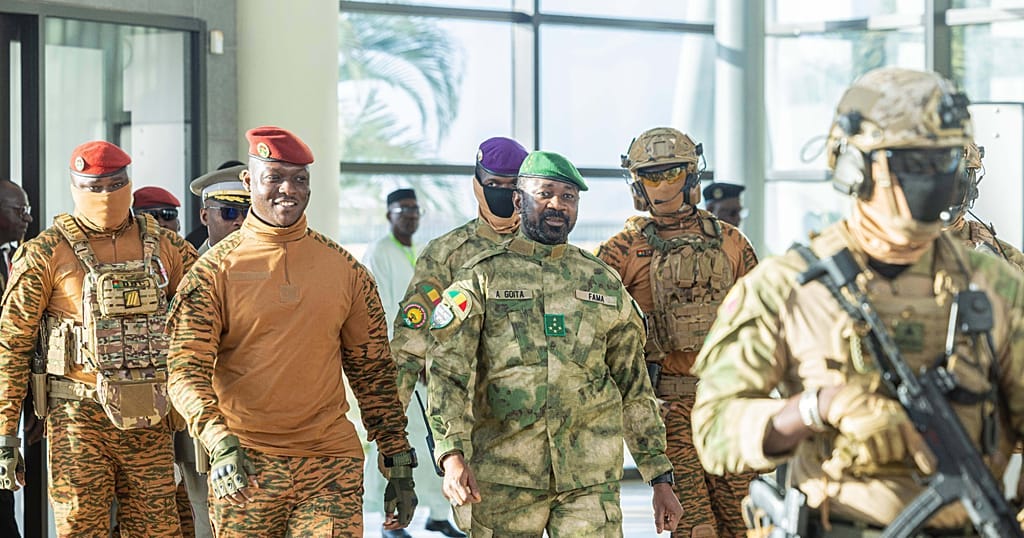
On February 2nd, the BBC published an extraordinary report on how the Trump administration “has declared a stark policy shift” towards Burkina Faso, Mali and Niger, the governments of which have sought to eradicate all ties to Western imperial powers, and forged the Alliance of Sahel States (AES). The independent bloc is a revolutionary enterprise, with the prospect further countries will follow its members’ lead. Washington is under no illusions about the new geopolitical realities unfolding in Africa.
The British state broadcaster records how Nick Checker, State Department African Affairs chief, is due to visit Mali to convey US “respect” for the country’s “sovereignty”, and chart a “new course” in relations, moving “past policy missteps.” Checker will also express optimism about future collaboration with AES, “on shared security and economic interests.” This is an absolutely unprecedented development. After military coups deposed the elected presidents of all three countries 2020 - 2023, the trio became Western pariahs.
France and the US initially aimed to isolate and undermine the military governments, halting “cooperation” projects in numerous fields. Meanwhile, the Economic Community of West African States, a neocolonial union of which all three were members, first imposed severe sanctions on Burkina Faso, Mali, and Niger, before its combined armed forces prepared to outright invade the latter in summer 2023. The three countries didn’t budge, and in fact welcomed Western isolation, forging new international partnerships and strengthening their ties. ECOWAS military action never came to pass.
In January 2025, the trio seceded from the union and created AES. Western-funded, London-based Amani Africa branded the move “the most significant crisis in West Africa’s regional integration since the founding of ECOWAS in 1975,” claiming it dealt “a significant blow to African…cooperation architecture.” Meanwhile, Burkina Faso’s leader Capt Ibrahim Traoré has become a media hate figure. A disparaging May 2025 Financial Times profile slammed him as a cynical opportunist leading a “Russia-backed junta”, and his supporters a “cult”.
As the BBC unwittingly explains, such antipathy towards Traoré stems from establishing himself “as a standard-bearer in resisting ‘imperialism’ and ‘neocolonialism’.” Via “vigorous social media promotion, he has gained huge support for this stance and personal popularity among young people across the continent and beyond,” ever since seizing office in September 2022. Far from just talk, Traoré and his fellow AES “junta” leaders have systematically neutralised malign Western influence locally, while pursuing left-wing economic policies for the good of their populations.
France and the US have proven markedly powerless to hamper, let alone reverse, this seismic progress. While officials in Paris and Washington hitherto relentlessly hammered AES members over “democracy and human rights”, the BBC reports such concerns will be wholly “absent from the agenda” when State Department officials now visit Mali. In other words, the Empire recognises it no longer has the ability to dictate the composition or policies of regional governments, and must engage administrations on their own terms.
‘Despotic Governments’
While generating only occasional mainstream interest, the push by Burkina Faso, Mali and Niger to purge their countries of Western imperialism has been remarkable in scope, and efficacy. French and US media programmes and channels have been blocked throughout AES. In August 2022, Paris’ forces were sent packing from Mali after a nine-year-long occupation. Two years later, Russian soldiers took over an airbase in Niger housing American forces at the government’s invitation, after authorities demanded Washington withdraw from the country.
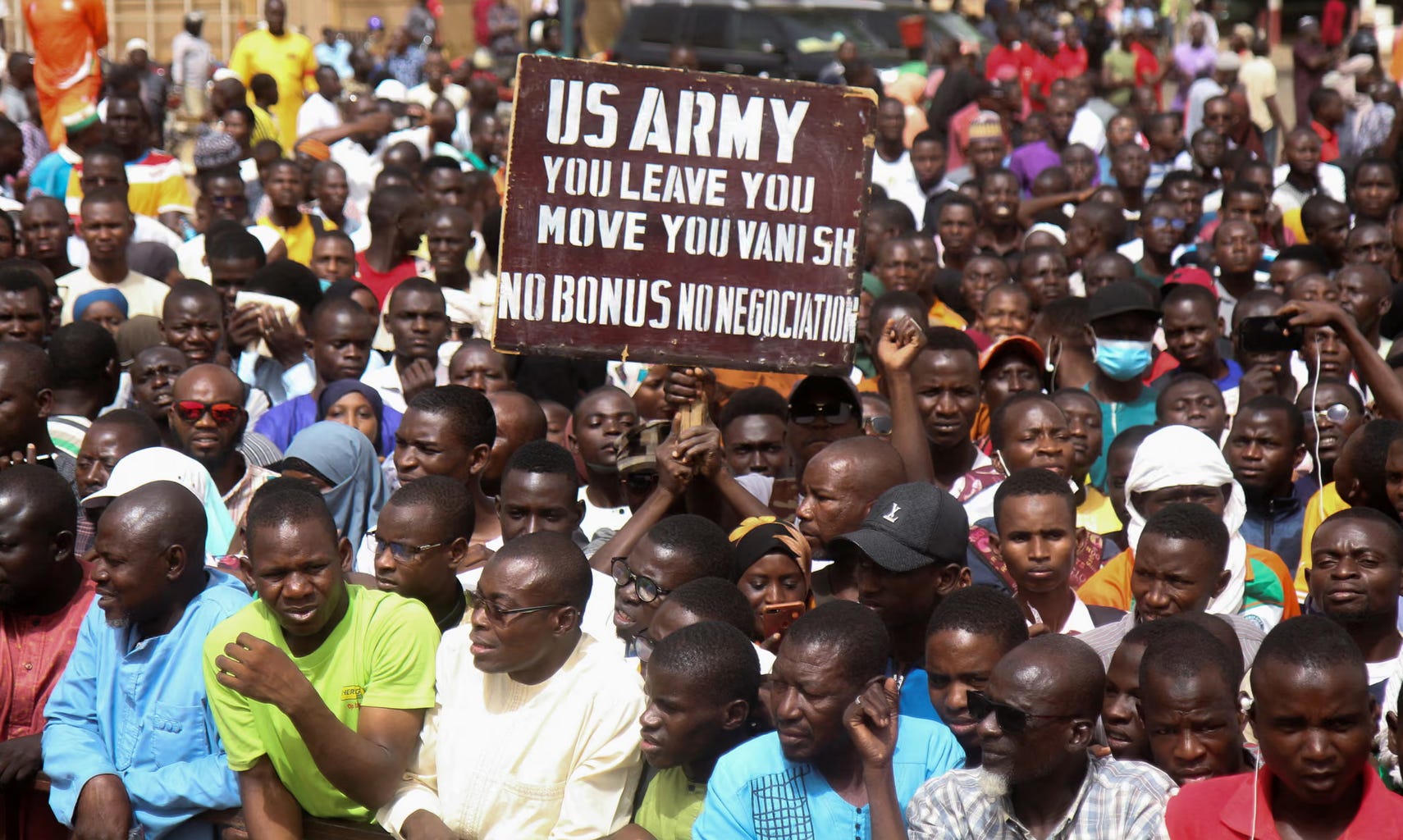
These defenstrations have had a knock-on effect in the wider region. For example, in November 2024 Chad abruptly terminated France’s longrunning local military presence. Around the same time, Senegal ordered the French close their base in Dakar. The last troops departed in July 2025, leaving Paris with no permanent army installations in Central or West Africa. Meanwhile, efforts by AES members to drive Britain, France and the US out of every major sector of their economies are ongoing.
Right when Chad and Senegal were bidding bon voyage to French forces, Niger seized control of local mining firm Somaïr, a component of state-owned French nuclear company Orano. Somaïr provided a quarter of the uranium supply to European nuclear power plants. Resultantly, EU imports of uranium from Russia rose by over 70%, despite supposedly crippling sanctions imposed over the Ukraine proxy war. In another bitter irony, Moscow has concurrently cemented itself as an ever-increasingly close economic and military ally of AES member states.
This burgeoning relationship has triggered a predictable chorus of condemnation and fearmongering from Western journalists, politicians and pundits. Yet, a March 2024 poll published by the German Friedrich Ebert Stiftung Foundation found 98% of Malians approve of their country’s bond with Russia, with 83% being “very satisfied” and 15% “rather satisfied”. More generally, the same survey highlighted how Mali’s “junta” enjoys overwhelming public support, about which Western governments can only fantasise.
In all, 81% of respondents believed life in Mali had improved since the military administration took office. A staggering 99% expressed satisfaction with the work of security forces, 95% were optimistic about the country’s future prospects, and 87% rejected calls for an election. Similar results were found in a poll of Burkina Faso’s population that August. Stunningly, 66% of citizens said military coups were wholly legitimate and necessary, if “elected leaders abuse their power for their own interests.”
As a fascinating paper by Senegalese academic Ndongo Samba Sylla forensically details, ever since supposed independence was granted to Africa in the 1960s, France and her closest allies have worked concertedly to ensure the continent’s constituent countries are ruled by pliant puppets. Along the way, the West has “shown no scruples in backing odious civilian or military regimes” favourable to their interests. This produces “choiceless democracies” across Africa, with “despotic governments” that come to power “through fraudulent elections and…do not create any welfare for their people.”
‘Lasting Solutions’
Sylla cites the example of Chad, where France sustained corrupt, brutal dictator Idriss Deby Itno in office 1990 - 2021. Following his death, Emmanuel Macron diplomatically backed his son’s “unconstitutional succession”. The French President’s unabashed advocacy for an illiberal, nepotistic power grab in the former colony is to be contrasted with his furious censure of the military coups in Burkina Faso, Mali and Niger, demands they hold elections, and calls for “financial sanctions from African countries, the West and its financial institutions.”
France could impose sanctions directly on the trio due to Paris’ control of the financial arm of ECOWAS. Membership ties African states to the CFA Franc, a currency created after World War II that allowed Paris to maintain grossly iniquitous trading relationships with its African colonies, when its economy was ravaged and overseas empire rapidly unravelling. The CFA Franc makes it cheap for members to import from France and vice versa, but prohibitively expensive for them to export elsewhere.
Such forced dependency creates a captive market for the French, and by extension Europe, decisively blunting local development. Member states are impotent to enact meaningful policy changes, as they lack control over their own economies, forced to take orders from the IMF, World Bank and Western investors. As Sylla remarks: “No matter who you elect, they will have to stick with the basic economic policy blueprint.” Creating a replacement currency is AES’ next major challenge - although its members have already started constructing a central bank.
AES’ continued existence, and successes, are anathema to Paris. Following “decolonisation” in Africa until today, the French have launched 50 overt interventions in Africa - which doesn’t account for assassinations of anti-imperialist leaders, palace coups, rigged elections and other skullduggery employed to maintain France’s mephitic, exploitative grip over her former holdings. Delusions of keeping the continent wedged under their heels have not faded, despite the dramatic collapse of their local clout. In April 2024, General Francois Lecointre, former French Army Chief of Staff, declared:
“What we Europeans have in common is the Mediterranean and Africa, where our destiny is at stake…Europe will have an obligation to return to Africa to help restore the state and bring back administration and development. It’s not China, Russia or Wagner [Group] who are going to provide lasting solutions to the very great difficulties facing these African countries and their people.”
Residents of AES evidently beg to differ, and stand ready to defend their leaders from foreign destabilisation. US officials aren’t unwise to the region’s new power dynamic. In an October 2025 interview with Le Monde, Trump confidante and State Department senior advisor for Africa Massad Boulos rejected any suggestion Washington would criticise the Sahel’s military governments, as while “democracy is always appreciated…people are free to choose whatever system is appropriate for them.” The anti-imperialist struggle continues apace in Africa. For now, the revolutionaries are winning.
Let the old saying "I fear the Greeks, even if they bring gifts" (Latin: Timeo Danaos et dona ferentes) be a warning to every patriotic African leader if the US or Western European governments come to them with so-called "good will " .
Africa should be very wary of the intentions of the US. 'Negotiations' will most likely be a cover for decapitation strikes!