

All my investigations are free to read, thanks to the enormous generosity of my readers. Independent journalism nonetheless requires investment, so if you value this article or any others, please consider sharing, or even becoming a paid subscriber. Your support is always gratefully received, and will never be forgotten. To buy me a coffee or two, please click this link.
On August 25th 2025, this journalist documented how the 1975 Helsinki Accords transformed “human rights” into a highly destructive weapon in the West’s imperial arsenal. At the forefront of this shift were organisations such as Amnesty International, and Helsinki Watch - the forerunner of Human Rights Watch. Supposedly independent reports published by these organisations became devastatingly effective tools for justifying sanctions, destabilisation campaigns, coups, and outright military intervention against purported overseas “rights” abusers. A palpable example of HRW’s utility in this regard is provided by Yugoslavia’s disintegration.
In December 2017, HRW published a self-laudatory essay boasting how its publication of “real-time field reporting of war crimes” during the Bosnian civil war’s early stages in 1992, and the organisation’s independent lobbying for a legal mechanism “to punish military and political leaders responsible for atrocities” committed in the conflict, contributed to the International Criminal Tribunal for the former Yugoslavia’s establishment. Documents held by Columbia University “reveal the fundamental role of HRW” in the ICTY’s May 1993 founding.
These files moreover detail HRW’s “cooperation in various criminal investigations” against former Yugoslav officials by the ICTY, “through mutual exchange of information.” The organisation is keen to promote its intimate, historic ties with the Tribunal, and how the ICTY’s work spurred the International Criminal Court’s creation. Yet, absent from these hagiographic accounts is any reference to HRW’s pivotal contribution to manufacturing public and political consent for Yugoslavia’s breakup, which produced the very atrocities the organisation helped document and prosecute.
In November 1990, HRW founding member Jeri Laber authored a tendentiously-titled op-ed for The New York Times, “Why Keep Yugoslavia One Country?”. Inspired by a recent trip to Kosovo, Laber described how her team’s experience on-the-ground in the Serbian province had led HRW to harbour “serious doubts about whether the US government should continue to bolster the national unity of Yugoslavia.” Instead, she proposed actively facilitating the country’s destruction, and laid out a precise roadmap by which Washington could achieve this goal.
Namely, by offering financial aid exclusively to Yugoslavia’s constituent republics, “to help them in a peaceful evolution to democracy,” while sidelining “weak” federal authorities from any and all “economic support”. She forcefully concluded, “there is no moral law that commits us to honor the national unity of Yugoslavia.” Coincidentally, mere days earlier, US lawmakers began voting on the Foreign Operations Appropriations Act, which codified Laber’s prescriptions as formal government policy.
Under the legislation’s auspices, Washington would provide no “direct assistance” to Yugoslavia’s federal government whatsoever. Moreover, financial aid would be withheld from the country’s constituent republics unless they all convened elections under US State Department supervision within six months. In a stroke, Belgrade’s central authority was neutralised, and the seeds of bitter, bloody wars of independence throughout the multiethnic, multifaith socialist federation were sown. Shockingly, Human Rights Watch was well-aware this was an “inevitable” consequence of terminating Yugoslav “national unity”.
‘Multinational Experiment’
In January 1991, HRW published an investigation, Human Rights In A Dissolving Yugoslavia. Laber was lead author, and its findings relied heavily on her visit to Kosovo the previous year. The report claimed the Serbian province was home to “one of the most severe situations of human rights abuse in Europe today,” due to the Yugoslav army’s mass-deployment. Kosovo resultantly teemed with soldiers and roadblocks. Numerous anonymous local Albanians told HRW lurid tales of atrocities, supposedly committed by the military and security forces against civilians.
The report briefly acknowledged Serbs, and Kosovo’s other ethnic and religious minorities, had previously “suffered abuse” from elements of the province’s Albanian population, and local governments “composed predominantly of ethnic Albanians.” It also noted prior HRW missions to Kosovo concluded the Yugoslav military’s mission was “to protect the Serb minority.” However, the report asserted there was now “no justification” for the army’s presence, and its true purpose was to “subjugate ethnic Albanian identity” locally on the Serbian government’s behalf.
That non-Albanians “suffered abuse” in Kosovo before the Yugoslav army’s arrival is quite an understatement. As The New York Times reported in November 1982, Albanian ultranationalists had in recent years embarked on a savage “war of terror” to create a Kosovo “cleansed of all Slavs.” That year alone, 20,000 terrified Serbs fled the province. In 1987, the outlet recorded how this barbarous crusade had intensified to such a degree, Yugoslav officials and citizens across the federation feared the outbreak of civil war.
“There is no doubt Kosovo is a problem of the whole country, a powder keg on which we all sit,” Slovenian Communist chief Milan Kucan, who three years later led his republic’s independence from Yugoslavia, was quoted as saying. “Officials in Belgrade” of every ethnic and religious extraction viewed the “challenge” of Kosovo Albanian secessionists as “imperiling the foundations” of the country’s “multinational experiment”. They cautioned of the “Lebanonizing” of their state, comparing the situation to the “Troubles” in British-occupied Ireland:
“As Slavs flee the protracted violence, Kosovo is becoming what ethnic Albanian nationalists have been demanding for years…an ‘ethnically pure’ Albanian region…Last summer, [Kosovo] authorities…documented 40 ethnic Albanian attacks on Slavs in two months…Slavic Orthodox churches have been attacked, and flags have been torn down. Wells have been poisoned and crops burned. Slavic boys have been knifed, and some young ethnic Albanians have been told by their elders to rape Serbian girls.”
Earlier in 1987, Belgrade’s nine-strong Presidency, led by Sinan Hasani - himself a Kosovo Albanian - formally condemned the actions of ultranationalists in the province as “counter-revolutionary”. In the parlance of socialist Yugoslavia, this was the gravest qualification that could be bestowed by the country’s leadership. Hasani remained part of the Presidency in February 1989, when its members unanimously declared a state of emergency in Kosovo, leading to the military’s deployment.
HRW singularly failed to probe this complex, essential context in its report. There was also no recognition whatsoever the situation in Kosovo for non-Albanians remained fraught at this time, to the extent Serbs escaping brewing ethnic tensions elsewhere in Yugoslavia were explicitly warned not to seek refuge in the province by authorities. These omissions are all the more unpardonable given HRW’s distorted view of events in Kosovo was central to the report’s conclusion - the US should sanction the Yugoslav federal government for human rights violations.
This finding was reached despite HRW conceding it was widely believed such punitive action against Belgrade would “inevitably” lead to the federation’s disintegration, with “human rights virtually guaranteed to suffer” as a result. The organisation however did “not endorse this position”, believing it of far greater urgency Washington “express its disapproval” over purported abuses in Kosovo via destructive sanctions. Meanwhile, HRW unbelievably stressed it took “no position on whether Yugoslavia should or should not stay together as a country.”
‘Communal Violence’
Fast forward to December 2002, and Jeri Laber testified as an “expert” witness during Slobodan Milosevic’s ICTY prosecution. Under cross-examination by the indicted former Serbian and Yugoslav President, she exhibited an absolutely staggering ignorance of socialist Yugoslavia’s culture, history, legal and political systems, and much more besides. Laber didn’t even know the federation’s founder and longtime leader Tito was - famously - a Croat. Her pronounced lack of local comprehension proved particularly problematic when Milosevic dissected an August 1991 HRW report, on the Croatian civil war.
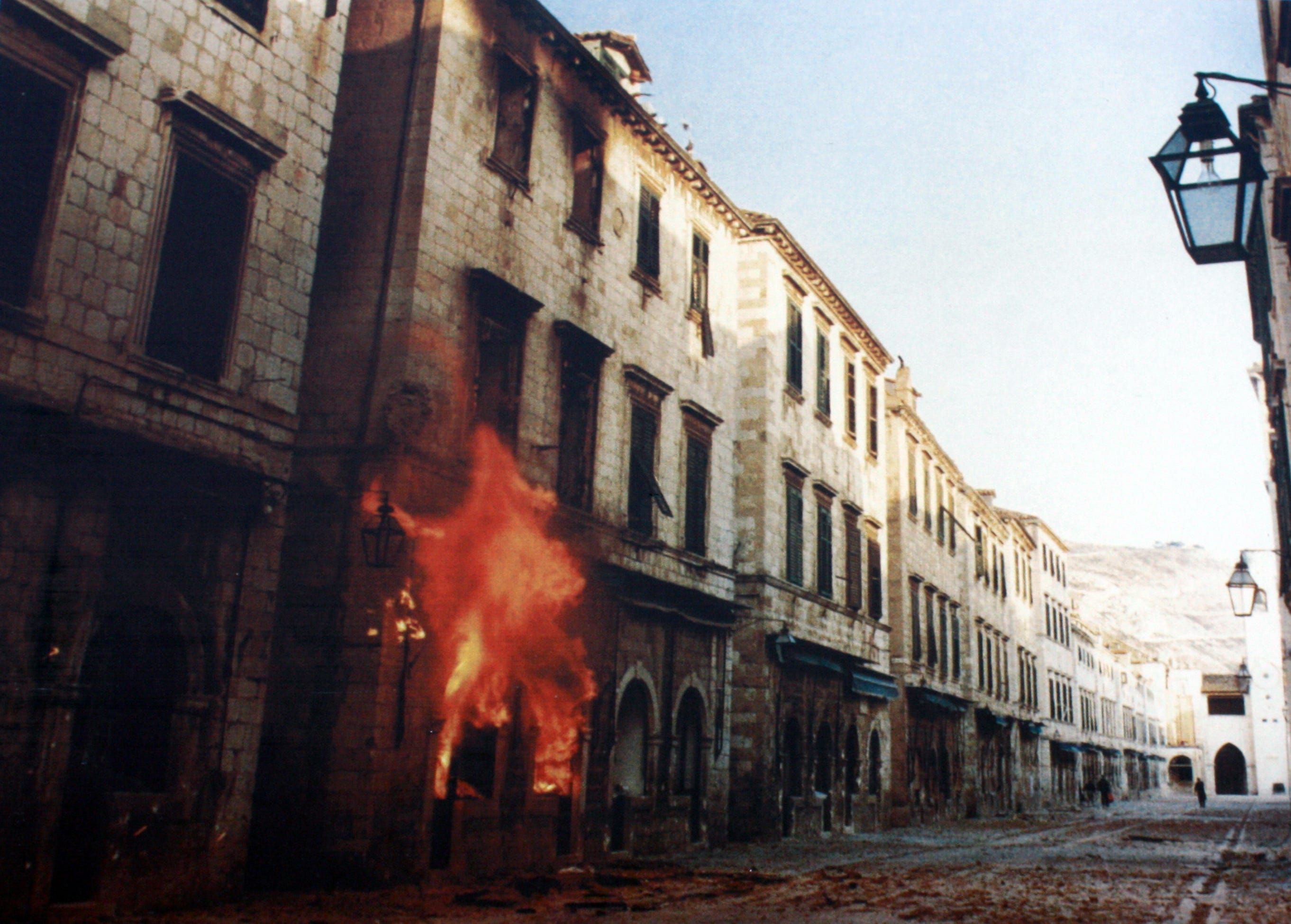
The probe made a number of bold claims regarding that conflict, describing “the resurrection of Croatian nationalism” producing the deadly standoff “as a reaction to 45 years of Communist repression and Serbian hegemony,” leaving Croats “bitter” over how Zagreb was, in Yugoslavia, “a vassal” of Belgrade. HRW strongly suggested - without evidence - Milosevic was personally responsible for fomenting local tensions and violence. Western sponsorship of Nazi-venerating Croat leaders, who openly advocated total erasure of their republic’s Serb population, was unmentioned.
Milosevic asked Laber how HRW could’ve possibly concluded Croatia’s membership of socialist Yugoslavia amounted to almost half a century of “Serbian hegemony”, given a Serb occupied the office of Prime Minister just once throughout the federation’s history, for a four-year-long period. He further questioned her cognisance of Belgrade’s three federal premiers 1982 - 1992 all being Croats, that Croats led and dominated Yugoslavia’s defence apparatus during the Croatian conflict itself, and how “all ethnicities were represented proportionally” in the country’s government and military by law.
Laber confessed to not knowing a single one of these inconvenient truths, fatally undermining the claims of every HRW report published on Yugoslavia under her watch - which inspired the ICTY’s formation, and prosecutions. Flailing on the witness stand, she resorted to arguing the countless flagrantly bogus assertions in HRW’s assorted Yugoslav investigations weren’t intended to be taken as her organisation’s own independent findings, or in any way rooted in reality, but merely reflected what some people locally had voiced to HRW researchers:
“We were not saying that was factually the case, we were trying to explain the attitudes we heard, what people told us when we were there…There was no intent or implication…this is what we thought. We were just saying Croats talked about many years of Serb hegemony. That was the way they seemed to see it, not the way we were saying it was…We were trying…to explain a very complicated situation to people who were not living in [Yugoslavia]...in our own simplest way.”
Such crucial, self-nullifying caveats were of course not included in any of HRW’s reports on Yugoslavia’s collapse and the numerous internecine conflicts that resulted, which the organisation actively encouraged and facilitated. That Laber’s witless pronouncements informed and justified US policy, despite her ignorance of the most basic facts about Yugoslavia, is a disquieting testament to the woeful quality of ‘expertise’ routinely exploited in pursuit of Washington’s imperial goals. What the federation’s breakup would produce was entirely predictable, and indeed contemporaneously predicted by scholar Robert Hayden.
In a December 1990 New York Times op-ed, Hayden - an actual expert on Yugoslavia - harshly condemned Laber’s strident call for the US to shatter the federation in the newspaper the previous month as “remarkable for its lack of comprehension.” He rightly warned, “those who would break up the country are strong nationalists, not likely to treat minorities within their own borders well,” while recording how the federal military’s interventions helped “forestall armed conflict” in Croatia that August, which could’ve easily spread across the country.
Comparing Belgrade’s present situation to the US civil war’s leadup, Hayden charged it was “truly bizarre…‘human rights’ activists so cavalierly advocate policies that are likely to turn Yugoslavia into the Lebanon of Europe.” With eerily precise foresight, he warned if Belgrade’s federal authority collapsed, “the republics are almost certain to fight one another because of the large minority populations that are scattered through the country.” His dire premonitions today reverberate as a prophet’s curse wretchedly validated:
“At best, we could expect strict repression, perhaps massive expulsions, the sundering of mixed towns and families, followed by permanent hostility and…communal violence as to make present human rights abuses in Kosovo seem absolutely civilized…The nations of Yugoslavia, despite their hostilities, are tightly bound to one another. These bonds cannot be broken, at least not without atrocities. ‘Human rights’ advocates should thus consider policies that will lead these nations to put down their arms, rather than policies that will induce fratricide.”
God bless you for your terrific reporting, research, teaching. Imperative info for a true history of our world. This knowledge & comprehensive view traces the steps of abomination our "heads of state" in Washington dare to continually force onto the world. Not a wonder we & our horrors perpetrated are now in full view. Thank you, Kit. Yours is a tremendous contribution.
And to think the reporting on the Račak massacre, (which you, Matt Taibbi, and Peter Worthington), have all disputed led to the bombing of Kosovo... Great journalism as always!