

All my investigations are free to read, thanks to the enormous generosity of my readers. Independent journalism nonetheless requires investment, so if you value this article or any others, please consider sharing, or even becoming a paid subscriber. Your support is always gratefully received, and will never be forgotten. To buy me a coffee or two, please click this link.
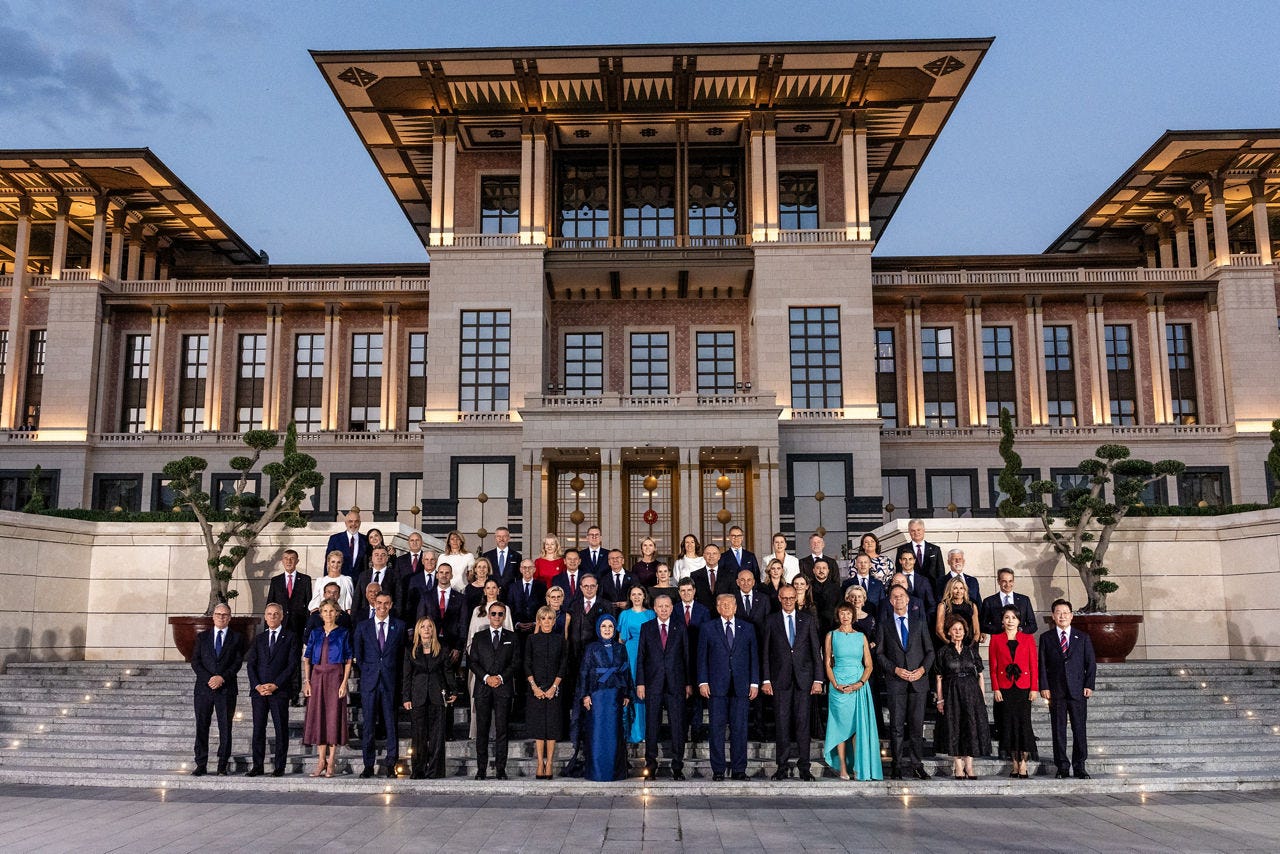
Donald Trump entered the July 7th/8th NATO summit having recently condemned the alliance as a “paper tiger” over its collective failure to abet the calamitous Zionist-American war on Iran, repeatedly threatened to withdraw US forces from Europe, with reveries of Greenland’s annexation still abounding. He left boasting of the intense “love” and “unity” within NATO, while praising member states for their reaffirmed commitment to spending ever-increasingly vast sums on ‘defence’. Meanwhile, the Ukraine proxy war’s world-threatening continuation appears assured for potentially years to come.
As such, the NATO summit signifies a significant triumph in Britain’s neverending battle to exploit the US Empire to further her own objectives. Highly revealing leaked files amply spell out how the alliance is a key mechanism by which Washington’s “interest” in Europe and West Asia is insidiously maintained, via London’s covert and overt machinations. NATO provides an invaluable “umbrella”, by which Britain projects economic, intelligence, military, and political power throughout these regions and the wider world, while countering competitors.
The documents were authored in March 2021 by Chris Donnelly, a veteran British military intelligence apparatchik who masterminded NATO expansion into the former Soviet Union, Warsaw Pact and Yugoslavia throughout the 1990s. Now an influential Ministry of Defence advisor guiding London and Kiev’s escalatory strategies in the proxy war, he writes in the leaks of Britain’s perpetual struggle to retain the “security” provided by “US military power.” This, combined with access to Washington’s globe-spanning intelligence network, “underpins our own position in the world.”
From Britain’s perspective, “the political solidarity between member nations” within NATO, and “the permanent political and military mechanisms that enable collaboration between its members and with its partners,” are as vitally important as the alliance’s capacity for “collective defence and security.” For example, “interoperability” between NATO members is considered “both a political and a military asset” and “valuable product”, enabling countries “with vastly different political and military systems to operate together.” That includes “[undertaking] complex and stressful military activities,” and other joint functions.
This makes NATO “a civilian-led political organisation…whose main tool is armed force,” intimately entrenched within its 32 members. Lacking any democratic structures internally and accountable to none externally, the alliance exerts enormous, often unseen influence over members’ constituent governments, security and intelligence services, militaries, police forces, and more. These “extensive political collaborative mechanisms” mean states can be corralled into adopting policies or taking actions regardless of local public will, or whether such moves actively harm their safety and/or national interests.

“Without the US, there is no NATO,” Donnelly notes. Hence, to “keep the US interested” in the alliance - and Europe by extension - Washington “must see a return on its (still very large and disproportionate) investment.” The 2026 NATO summit ended with European leaders pledging to plunge tens of billions into US-made military equipment for Kiev over this year and next, a prospect offering Washington quite some “return”. But the British have other means of encouraging and maintaining US hegemony, for their personal profit.
‘Symmetrical Exchange’
Elsewhere, Donnelly writes of the “special relationship” - the “political/military/security/intelligence” alliance between Britain and the US, “which has existed since World War II.” He notes how from inception, Washington was driven “by how much the US needed something from the UK to help the US develop and maintain its superpower status.” In other words, “what the UK could provide the US…the US could not itself produce.” Accordingly, London “traditionally contributed” its historical “knowledge and experience” to Washington’s crusade for global domination.
This frequently entailed “intelligence-gathering and analysis; technical expertise, especially inventiveness, ideas and scientific information; the experience of having dealt with a situation new to the US.” Meanwhile, “political and military support” was provided by London “wherever this supported US policy interests and to help the US get what it wanted in the world.” While Britain’s methods in every regard have evolved significantly over time, these ultimate underpinning and overriding objectives in so many matters military, intelligence, foreign and even domestic have not changed:
“Being able to provide something the US wants and needs is still the only reliable way to get US respect and to maintain the ‘special relationship’...Today, this is translated into whatever will help the US maintain its position in the world, promote US interests…and ensure US economic well-being. If we can still provide something useful for the US, something they cannot do for themselves, then they will be prepared to reciprocate very generously.”
Donnelly frames this concord as a perpetual “barter deal” - not a “symmetrical exchange” or “issue of cost and payment”, as “if the US can buy what it is deficient in on the world market, then there is no basis for the ‘special relationship’.” He references Britain’s consistent “willingness and ability to deploy a significant contingent of effective army…to reinforce US military operations…readiness to share casualties…[and] continued readiness to host US forces on UK soil or on overseas dependencies” as historic pull factors.
Britain can also “employ other kinds of power to achieve an effect which supports US policy or interests.” This includes “economic power, political influence, a technical ability, such as cyber-warfare, or a civilian state-building or humanitarian relief capability.” Accordingly, files leaked by Edward Snowden indicate British signals intelligence agency GCHQ is acutely aware it “must pull its weight and be seen to pull its weight” by its NSA ‘partner’, to reap vast US funding for elaborate foreign spying operations. Donnelly concludes:
“On balance, the special relationship is of real importance to the UK, but also of some worth to the US…The burden of sustaining the special relationship falls principally to the UK. The US may well lose out if the relationship fails, but it will not notice the loss as much as the UK will. However, the special relationship is neither permanent nor guaranteed. We cannot take it for granted. It needs to be worked at constantly, refreshed and renewed.”
‘Defense Capabilities’
On the subject of renewal, Donnelly lamented how London’s utility to the US Empire had been “significantly diminished” over recent years. This resulted from the British Army’s “indifferent military performance in Iraq and Afghanistan,” the “run-down of our intelligence capability,” and “the perception (on the part of the US and other allies) the UK is no longer investing sufficiently in its military to be able to play the leading role it used to do in Europe, both as an operator and as a technical innovator.”
Donnelly moreover noted Britain “used to be at the cutting edge of some aspects of military thinking,” but had in many respects “lost this edge.” For example, “we can no longer instruct the US on how best to conduct counter-insurgency operations.” Furthermore, the “special relationship” was “put under pressure” by President Barack Obama’s “reorientation of US strategy to focus on China.” Instituted in 2011, this “pivot to the Pacific” was sustained under subsequent administrations, with varying degrees of intensity.
Donnelly cheered how “the Ukraine and Syrian conflicts have reawakened US interest a little” in Europe and West Asia, meaning “Russia can no longer be ignored” by Washington. Nonetheless, he warned “we have not yet turned the corner.” Unmentioned by Donnelly was his personal role in disrupting Washington’s “pivot” towards China by inflaming the Donbass civil war, to ensure the Empire didn’t “ignore” Russia. He openly articulated this malign mission while testifying to a British parliamentary defence committee in July 2014.
Donnelly proposed establishing a permanent British “standing force” in the Baltics, to conduct military exercises on Russia’s border, while serving as a “tripwire” to “dissuade and deter” Moscow. He believed it “very important” for London to pursue this strategy, as “Britain’s leadership…will encourage the Americans to take a greater interest in NATO and reinforce their support of the organisation.” He added, “we have an important role to play in bringing the Americans in more,” as “US eyes” had recently been directed “away from Europe.”
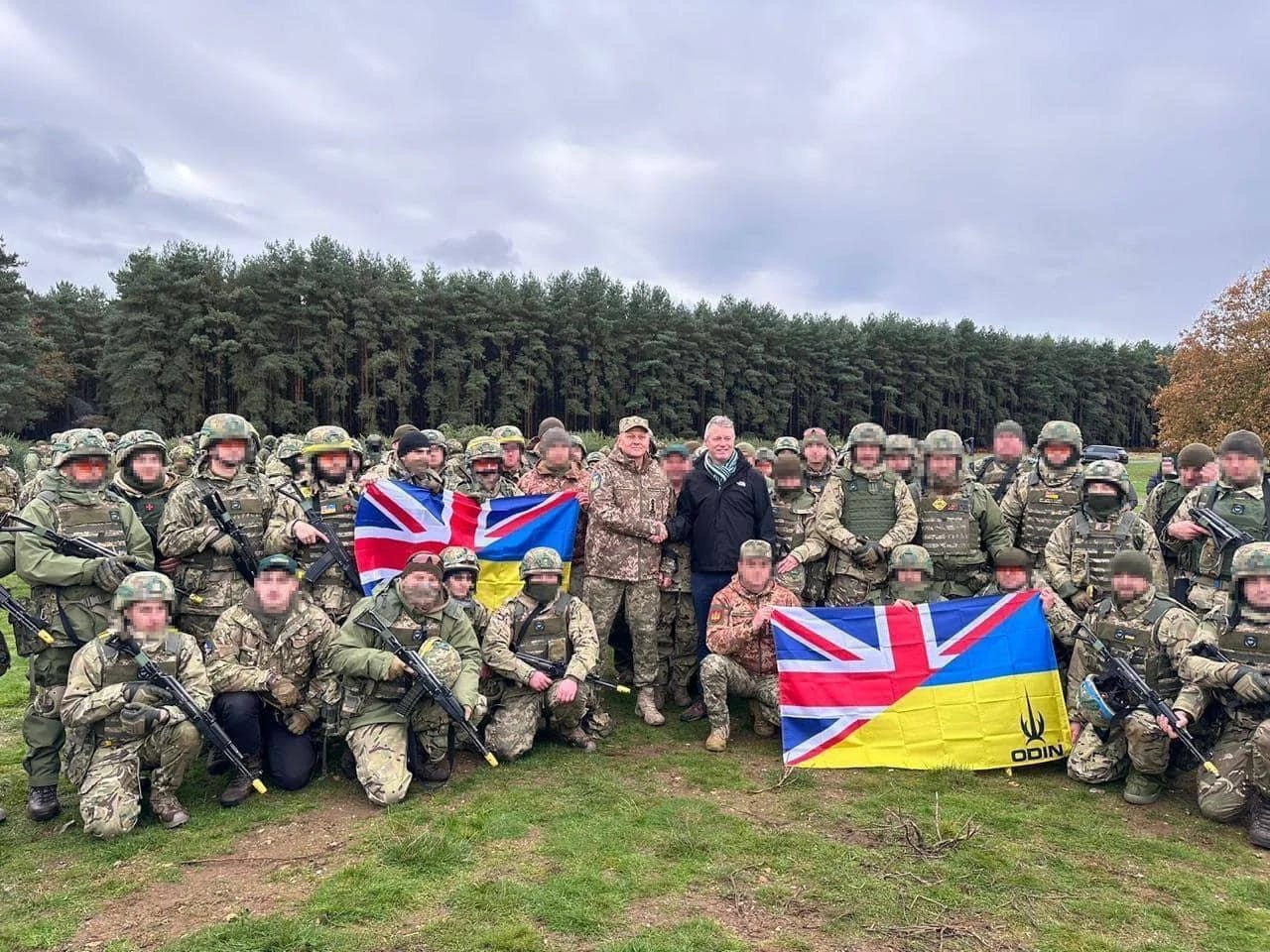
Resultantly, London provocatively dispatched thousands of soldiers to Russia’s periphery. Moreover, Britain took the lead in training Ukrainian forces - including notorious Neo-Nazi paramilitary factions such as Azov Battalion. At the time, Washington adhered to the “Obama Doctrine”, which stipulated the US should avoid escalation against Moscow, and prohibited provision of “lethal aid” and other military assistance to Kiev. A February 2015 Kyiv Post report on Britain’s training program quoted Donnelly at length, suggesting his central involvement in its delivery:
“This is just the sort of help Ukraine needs now. The British Army obviously brings considerable operational experience and a pretty good reputation.”
As Donnelly predicted in his defence committee testimony, Britain’s tutelage of Ukrainian forces had the desired effect of “bringing the Americans in more.” In July 2015, it was announced the US would formally begin training Kiev’s military by the end of the year. Still, a State Department spokesperson stressed the effort was merely “small unit training...to help strengthen Ukraine’s internal defense capabilities.” They firmly asserted Washington’s focus in the country remained on “nonlethal aid” and “there is no plan to change that.”
Fast forward to December 2017, and Trump greenlit provision of weaponry to Kiev. It was among a number of hostile acts during his first term that ratcheted tensions between Washington and Moscow, placing Ukraine firmly on the warpath with Russia. The recent NATO summit, and subsequent pledges by the US to assist Ukraine directly with drone and patriot missile production, shows the Empire has “turned the corner” at last. US “interest” in Europe is assured, for at least as long as the proxy conflict endures.
This is brilliant thank you. Kudos. One hardly thinks of the Brits regarding the war in Ukraine but they are the very fuse and the very match, using US gunpowder. They have been trying to destroy Russia for centuries. A lot of clownish geo-political analysis is going around that has the Orange Emperor challenging the centuries-long hegemony of the Brits, maintained primarily now (that they hardly have an Army OR a Navy!) via finance, insurance, the world's best espionage and bizarre, powerful hidden diplomatic strategies you have here exposed. Ditto for the Israel/Iran catastrophe. The Orange Emperor is clearly working for the man. No doubt MI6 trained Mossad (though I can't find documentation for that-quelle surprise-since England literally created Israel) who via Epstein have Orange Emperor by the balls literally. Brit monarchs have been posing for their coronation portraits with a sceptre AND A GLOBE since 1390! Clearly they are mad and madness eats itself eventually. Which appears to be about now.
Donnelly certainly seems to be a key figure in this warmongering operation, along of course with Paul Mason.
Is there any indication as to whether they believe their efforts are bearing fruit in public opinion terms, or whether they are considering elite-class opinion only?